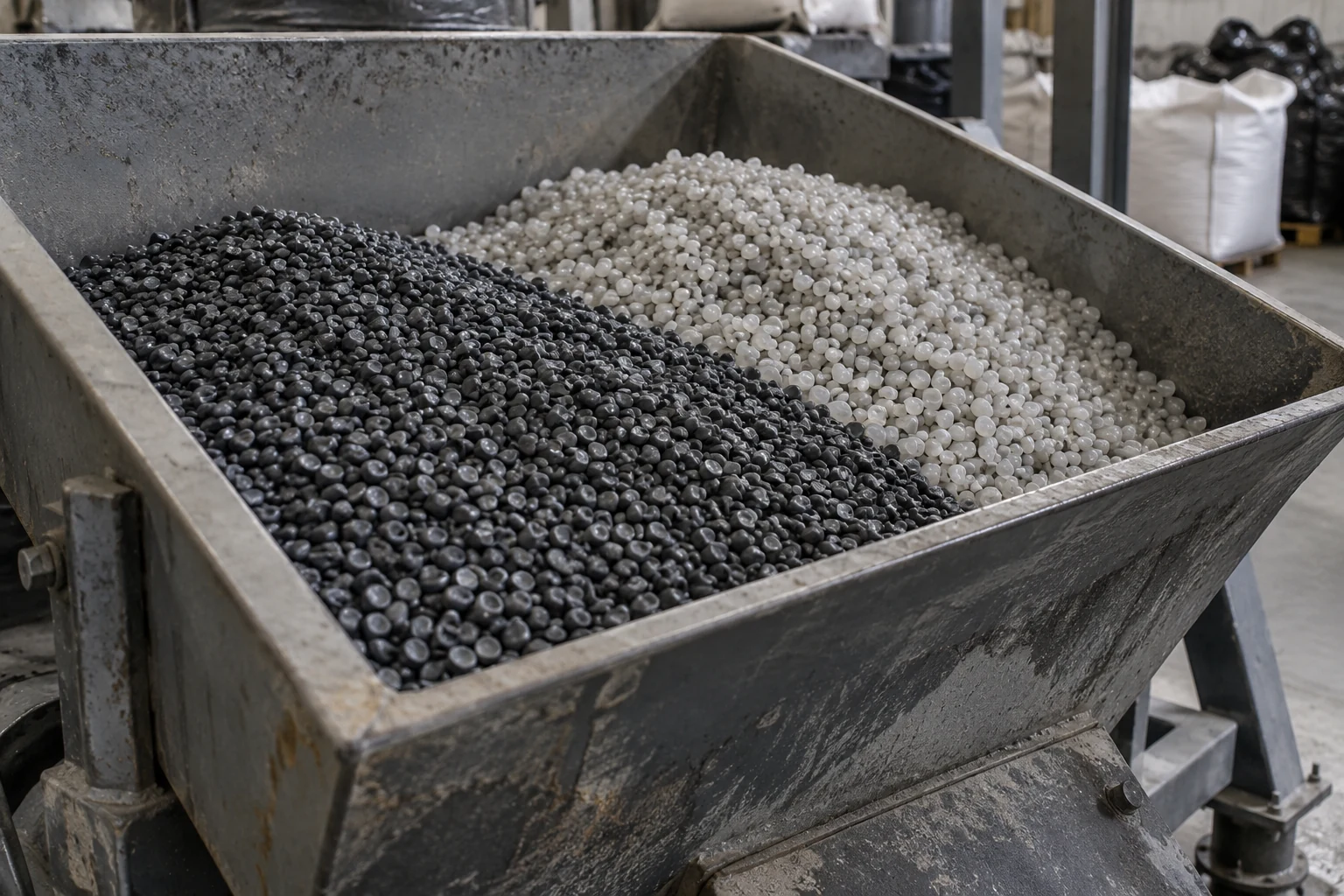
A correct fill can still become a failed pack if pellets enter the closing area or the sack pulls during sealing. Specify the bag structure and loaded handling condition before selecting an industrial plastic bag sealer.
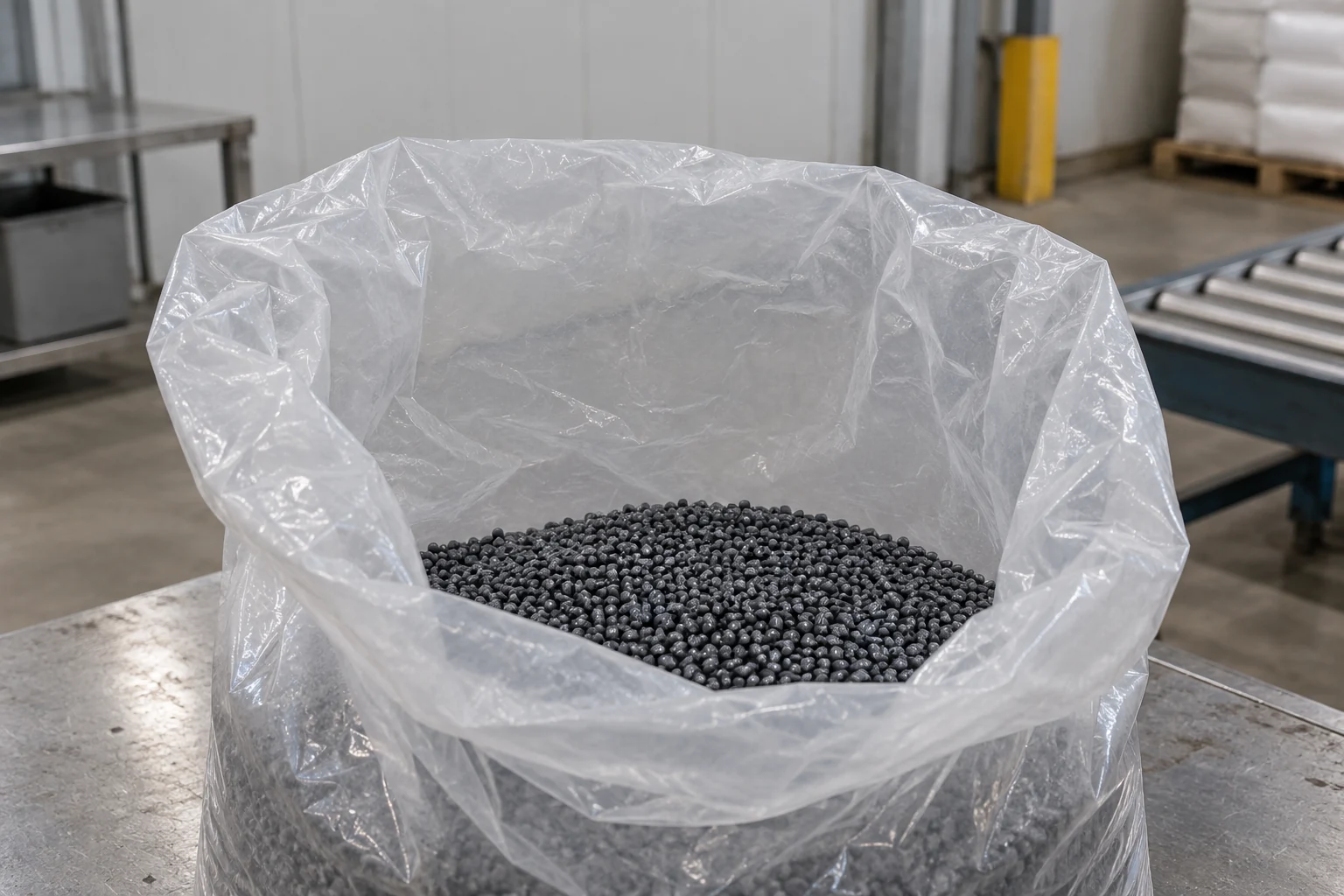
Validate closure with the intended bag and product, using a controlled setup and explicit acceptance criteria. Keep the sealing area clean and the filled bag supported as required by the selected equipment. A straight-looking seal is an observation; it is not a substitute for the agreed closure test.
Obtain the complete bag specification
Request the bag’s layer structure, sealant layer, thickness basis, gusset arrangement and supplier processing guidance. “Plastic bag” is too broad to define a heating recipe. Recycled content in the product inside the bag does not establish the sealing behavior of the bag film.
Distinguish the closure architecture. An intermittent jaw or impulse process applies a cycle to a stationary mouth. A continuous system transports the mouth through its closing zone. Verify that the actual loaded bag, film and intended handling fit the proposed design; neither architecture is universally preferable.
| Trial input | Record | Why it belongs in the closure decision |
|---|---|---|
| Bag construction | Supplier specification and lot | Establish what material forms the joint |
| Mouth geometry | Gussets, folds and loaded shape | Uneven layers can change the closing problem |
| Product condition | Pellets, fines and relevant temperature | Determine contamination and handling conditions |
| Support | Bag, box or conveyor arrangement | Avoid unintended movement or loading during closure |
| Setup | Documented parameters and instrument status | Make the trial reproducible |
| Acceptance | Test method, sample plan and pass criteria | Define what a satisfactory closure means |
Preserve the closing area during filling
Keep the filled material below the intended closing area and observe what happens when the sack is moved. Fines can migrate, and a bag that leaves filling clean may arrive at closure folded or contaminated. Record the actual transfer rather than checking an empty bag alone.
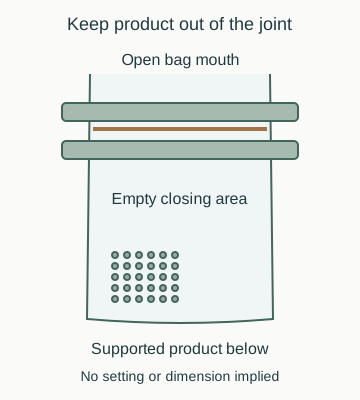
The diagram shows the physical distinction between the product zone and the closing zone. It provides no required headspace, jaw gap or sealing dimension. Confirm those with the bag and equipment suppliers using the loaded sample.
Use the granule filling guide to document the upstream dose and bag support. Keep the fill acceptance and closure acceptance as separate entries in the pack record.
Control the variables the machine actually uses
Audion’s Power Sealer PLUS IP65 Bag-in-Box description discusses supported heavy-bag handling and monitoring of temperature, time and force in that equipment. It illustrates why a reproducible sealing setup needs more than a temperature number. It does not establish settings or approval for a recycled-granule application.
For the proposed system, identify the controlled variables, what is measured and what happens when a condition falls outside the approved range. With continuous transport, include the relevant speed or dwell relationship from the actual machine documentation. Avoid copying a value from another bag or film.
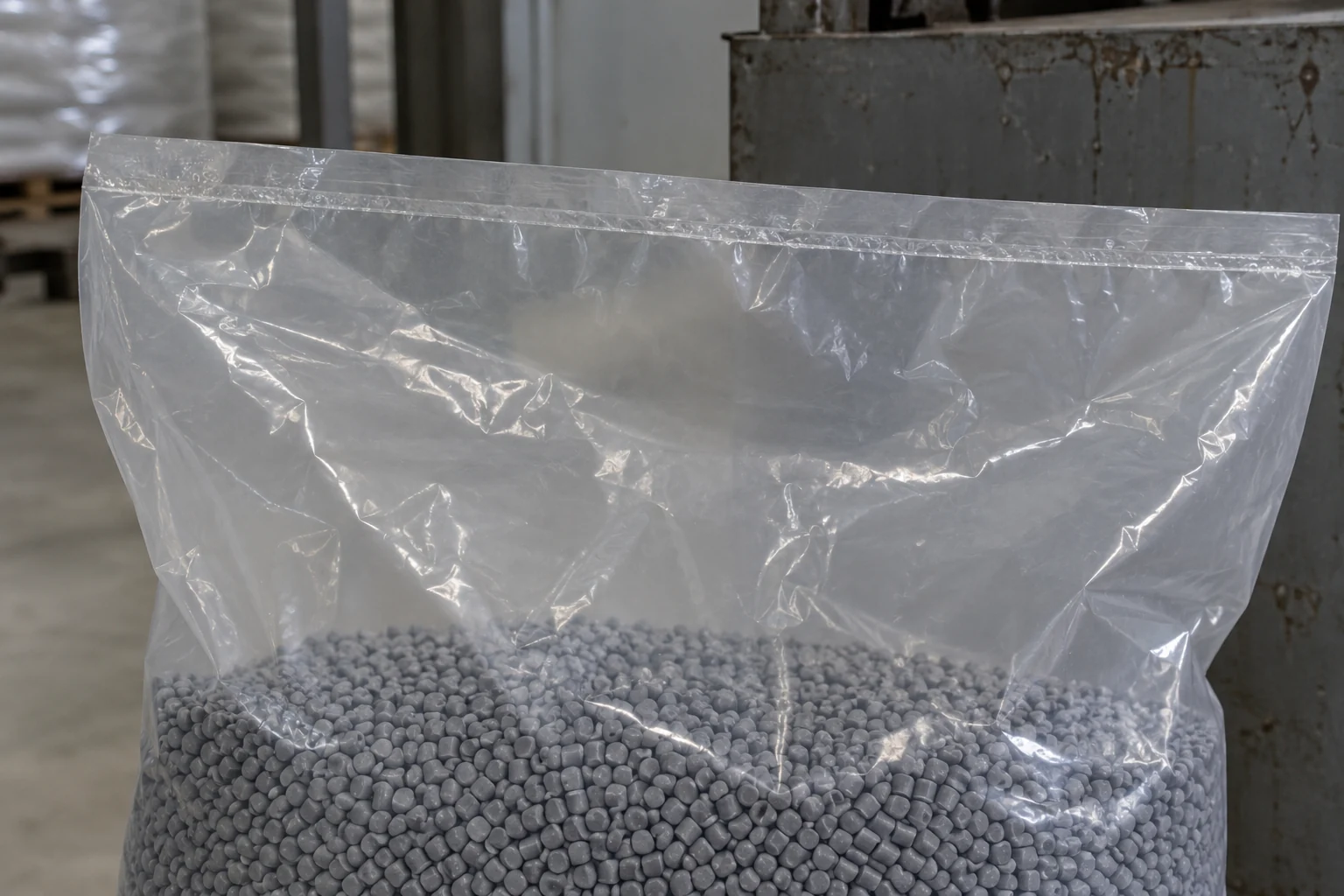
Match observations to the next investigation
| Observed problem | Investigate without assigning a cause prematurely |
|---|---|
| Pellets or fines in the joint | Filling height, transfer disturbance and mouth preparation |
| Wrinkles across the joint | Bag presentation, gusset handling and support |
| Burn-through or distorted film | Actual setup, material identity and cycle history |
| Apparently incomplete joint | Surface contact, contamination and approved test result |
| Failure after moving the bag | Support during closure, cooling/handling requirements and loading |
Follow the manufacturer’s safe stopping and adjustment instructions. The table is a diagnostic record aid, not authorization to reach into jaws or modify guards.
Retain closure evidence with the material lot
Record bag and product identity, setup reference, operating state, sample-taking points, visual observations, test method, results and disposition. Agree the sample plan and performance criteria before the trial. Reassess after a material, bag construction or handling change that could affect the joint.
A filled sack may require leak, strength or other tests depending on its function. The responsible packaging team must select the applicable method and current requirements. This guide prescribes no universal seal-strength number, temperature or regulatory test.
Methods and boundaries
Public equipment descriptions support the control and handling distinctions. The worksheets are editorial recommendations for solid granular materials. Char, fine powders and hazardous residues require their own assessment; this page establishes no suitability for them. Continue in recycled-material bagging. Updated October 2026.