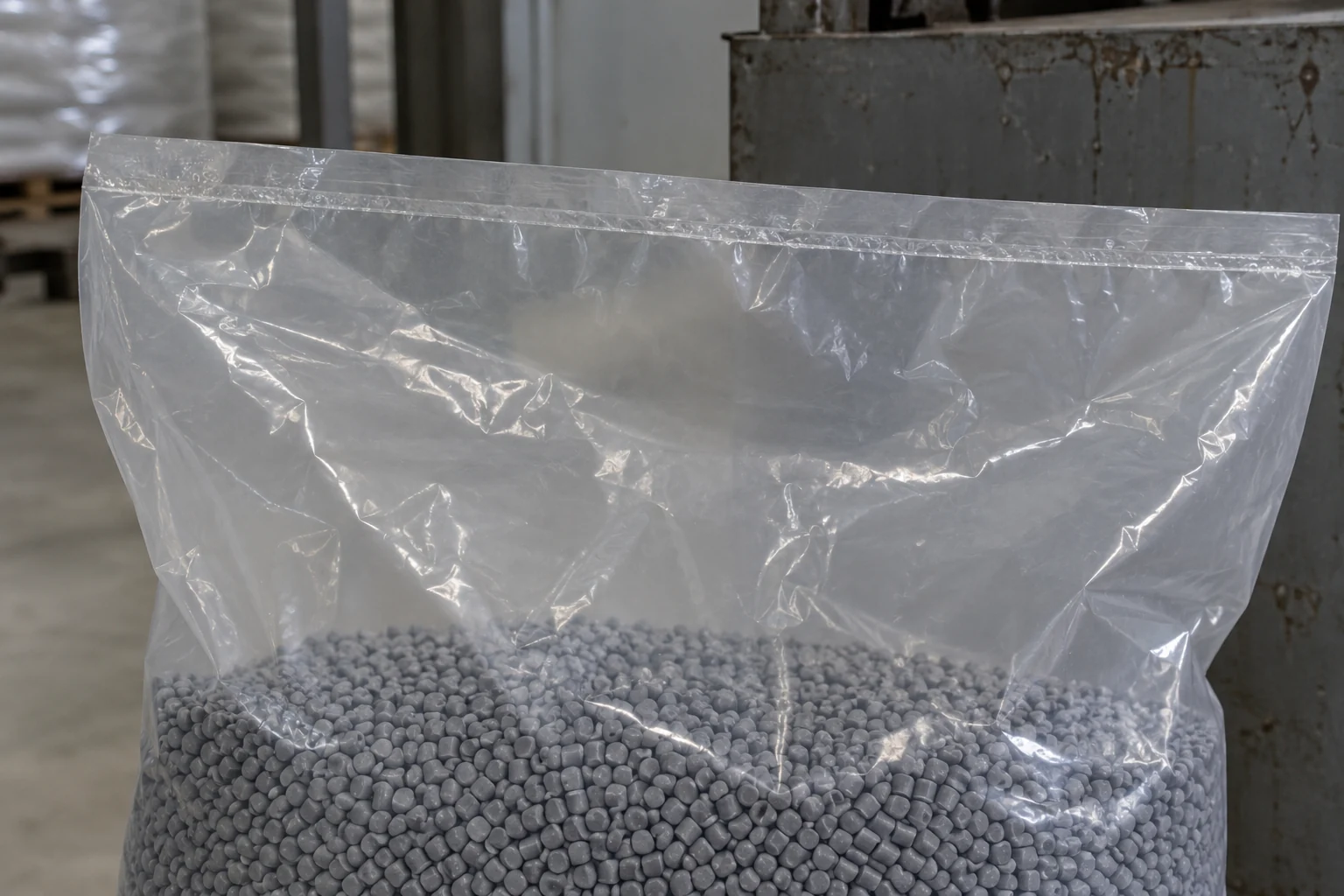
Recycled granules can differ in flow and bulk behavior even when the bag weight is unchanged. Specify the actual solid product and a complete weighing-to-bag handoff before choosing a granule packing machine.
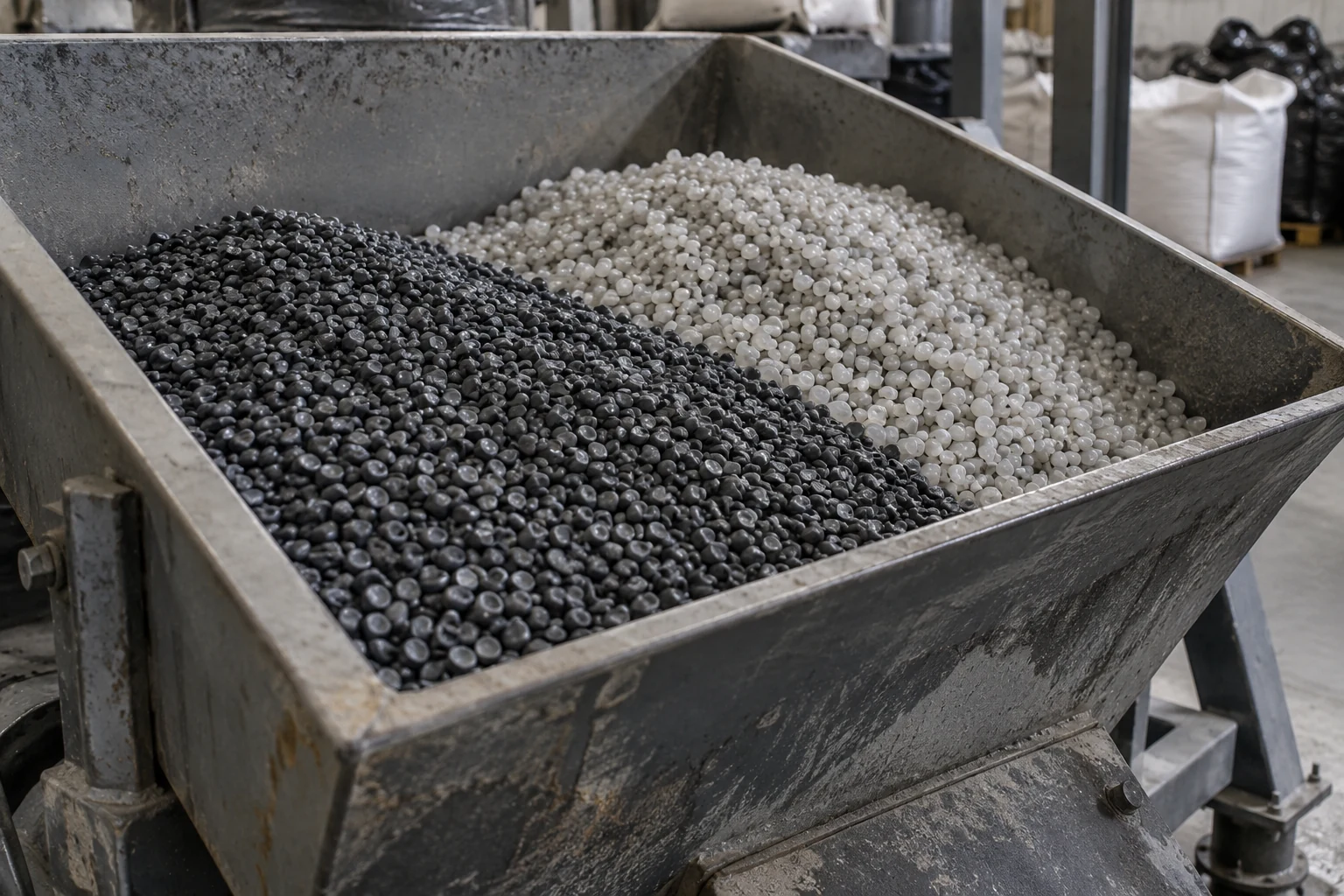
Start with representative material, the target bag format and a defined net-mass acceptance method. Compare dosing and support arrangements under those conditions. This guide concerns an already produced granular solid; pyrolysis oil does not become plastic pellets merely by entering packaging equipment.
Establish the material and production boundary
Identify the polymer or product grade, source process, pellet shape, fines, moisture condition and bulk-density information supplied for the actual material. Record how those properties vary across lots. Do not label unidentified solid residue as recycled plastic granules.
Plastic Energy’s January 2025 process description, pages 6–7, extends pyrolysis oil through later chemical processing and polymerisation to LDPE granulate. Bagging belongs after a defined solid product exists. The pyrolysis process guide explains that separation.
Compare weighing arrangements on the same basis
MF TECNO’s plastic-granule packaging page describes both net- and gross-weight dosing and several bag formats. It establishes that these are offered arrangements, rather than proving their suitability for a particular recycled material.
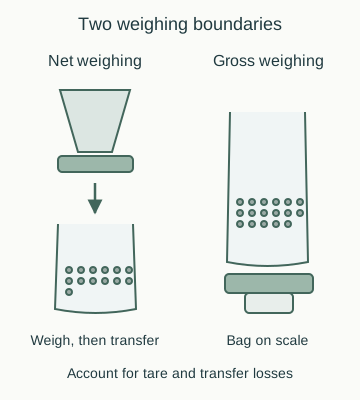
MF TECNO’s semi-automatic bagging explanation locates these weighing boundaries. In a net-weigh arrangement, a separate weighing receptacle determines the dose before transfer to the bag. In a gross-weigh arrangement, the bag and supported contents form part of the weighing boundary, with tare accounted for. Confirm the precise implementation and transfer losses in the proposed system.
| Input or decision | Evidence to prepare | What it affects |
|---|---|---|
| Material behavior | Representative lots, fines and flow observations | Feeder and transfer evaluation |
| Target net mass | Product requirement and acceptance basis | Weighing range and control strategy |
| Bag format | Actual bags or rollstock and loaded geometry | Presentation, support and closing interface |
| Tare | Empty-package variation and handling method | Meaningful net-content decision |
| Product drop | Transfer path and sample observations | Spillage, segregation or damage assessment |
| Accepted throughput | Full-cycle trial with normal interventions | Workstation capacity |
Catalogue output rates cannot substitute for accepted bags with this material and package.
Trial the material through transfer and settling
Observe how the feeder starts, stops and clears, and whether pellets or fines remain in the transfer path. Record spills and retained material separately from the weighed dose. If the dose is correct in the weigh receptacle but material is lost before reaching the bag, the receiving package may not contain the intended quantity.
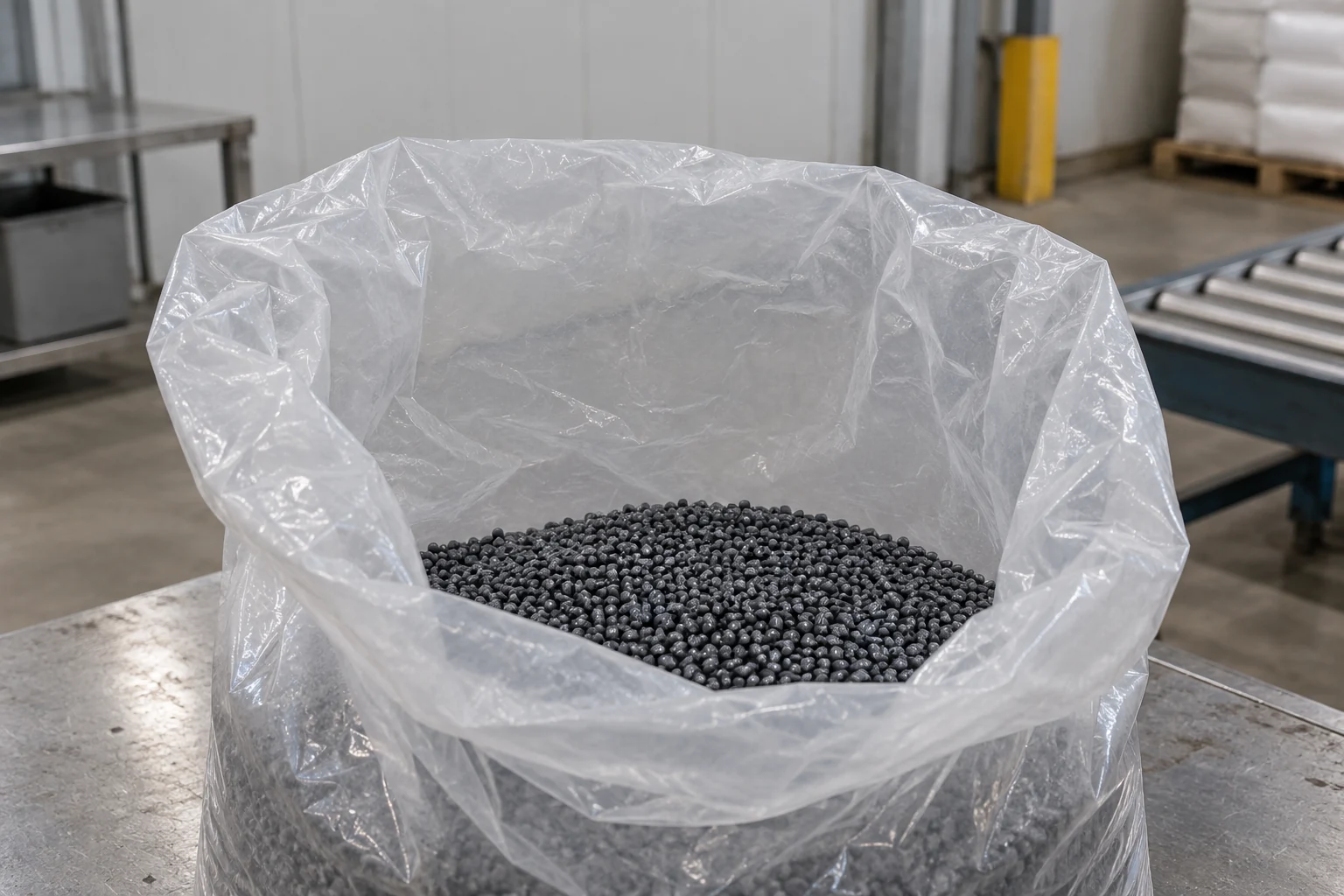
Support the bag in the configuration proposed for production. Confirm how the mouth remains available for filling and later closure without interfering with weighing. Check the loaded bag’s stability through removal and transport to the next operation.
Avoid assuming that a clean pellet sample represents a dusty or variable recycled stream. Give the supplier the difficult material as well as the ordinary lot, and keep its identity in the trial record.
Define the weighing acceptance record
Record material lot, bag lot, setup reference, verification instrument and its status, tare method, target, measured net results, rejects, spills, intervention time and accepted throughput. Establish the allowed net-content criteria and verification method for the actual product and market with the responsible team; this article supplies no legal tolerance.
Include startup, replenishment and a restart if those states occur routinely. Count held bags separately and document their disposition. Use a consistent observation window so faster dosing does not conceal slower handling or frequent adjustment.
Hand off to closure with a separate decision
Weighing acceptance does not establish that the bag can be sealed reliably. Preserve empty bag-mouth space and record how the filled sack reaches the closing operation. The industrial bag-sealing guide covers bag structure, supported handling and closure evidence.
Fine powder, char and hazardous residues fall outside this pellet-focused selection method. Obtain their specific material characterization and risk assessment before proposing a filler, dust system or closure arrangement.
Method and scope
The workflow combines public packaging-system descriptions with an original trial checklist. No machine specification, guaranteed rate or material qualification is inferred. Explore recycled-material bagging for the full filling-and-closure boundary. Updated October 2026.