
A shredded plastic stream can still fail the receiving plant’s requirements. Begin with a written feedstock agreement and a representative description of incoming packaging waste before specifying pretreatment equipment.
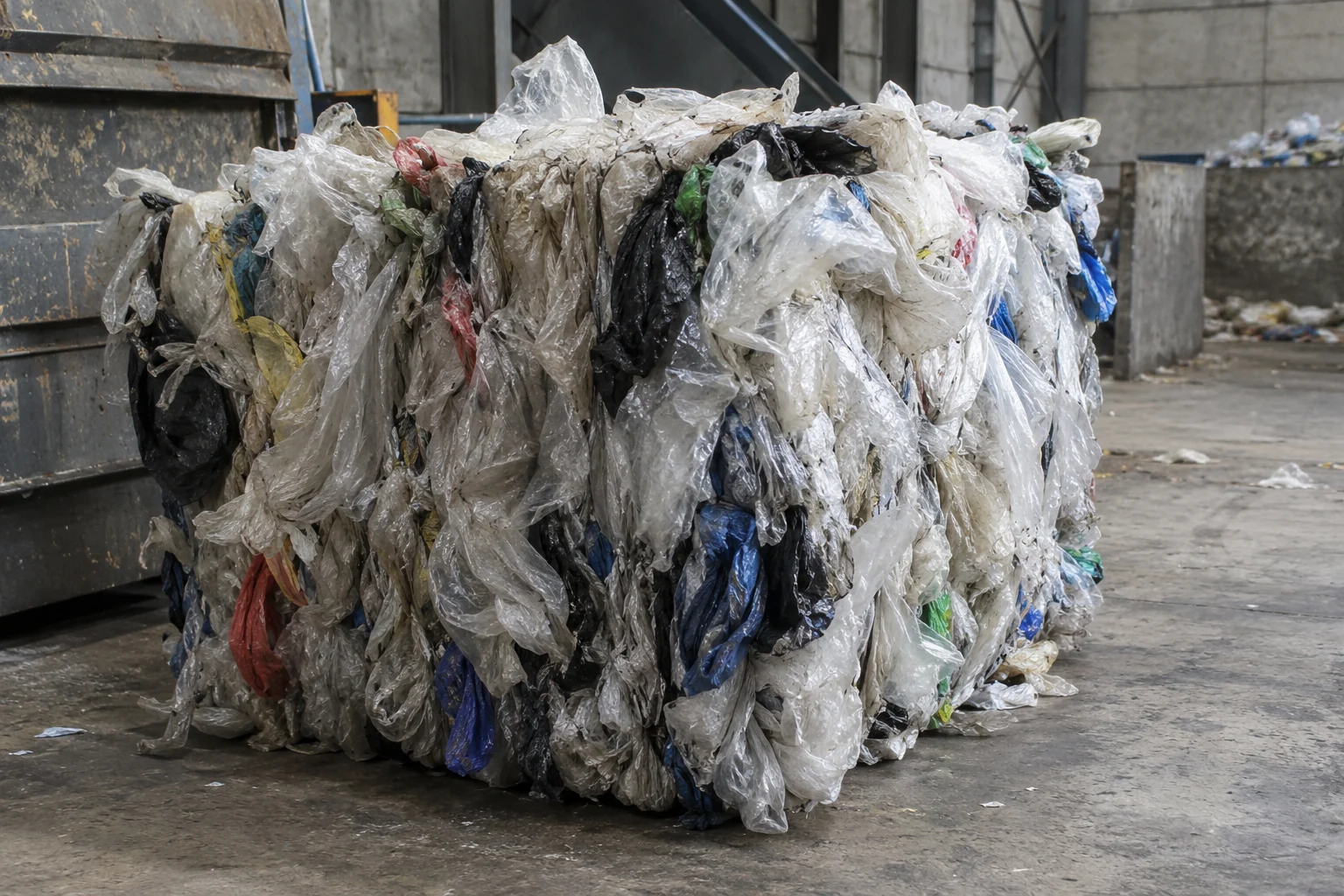
Each preparation step should address an identified feedstock problem and have a verification point. Agree the sampling method, analytical basis and failed-load disposition with the receiving operator. No single moisture, chlorine or particle-size limit applies to every pyrolysis process and downstream use.
Obtain the receiving requirement in a usable form
Ask for the accepted polymer mix, excluded materials, contaminant definitions, physical preparation requirements and how compliance is determined. Record units and whether concentrations use an as-received or dry basis. Keep the sample-taking method with the numerical result.
The Eunomia Feedstock Quality Guidelines report builds a model specification from market and operator information. It discusses polymer composition and contamination, including chlorine-bearing materials. Its published thresholds are not reproduced here as universal acceptance limits; the plant’s own current agreement must govern the actual load.
| Requirement | Define before selecting equipment | Verification point |
|---|---|---|
| Polymer composition | Accepted fractions and identification basis | Representative incoming and prepared samples |
| Non-plastic contamination | What counts and how it is quantified | Before and after the relevant separation |
| Moisture | Basis, method and receiving criterion | At the agreed delivery or storage state |
| Halogens or other chemistry | Analytes, method and reporting basis | Laboratory sample with traceable preparation |
| Physical form | Size distribution and feed presentation | Prepared material at the receiving boundary |
| Consistency | Allowed load variation and change notification | Lot history and incoming-source changes |
Match the step to the problem
Sorting separates fractions according to a defined identification or physical method. Size reduction changes geometry. Washing or drying, where specified and justified, addresses a different property. Do not assume one step produces every required change.
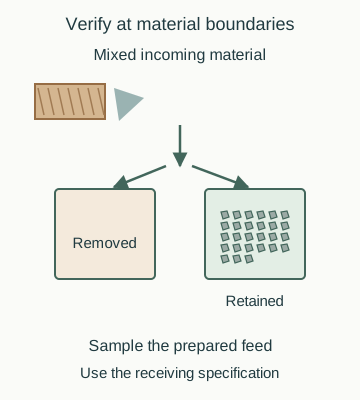
Plastic Energy’s January 2025 system description, pages 5–6, includes extra sorting to meet its own process-feed requirements. That supports the need to connect preparation to a receiving specification. It does not establish the right machine order or performance for another incoming waste stream.
For each proposed step, record the intended retained fraction, removed fraction and subsequent destination. If a supplier says a unit “improves quality,” ask which property changes and how that change will be measured under the agreed feed conditions.
Preserve sample identity through preparation
Describe where and when increments are taken, how the composite or individual samples are formed, and how subsamples reach the laboratory. A convenient scoop from the top of a container may not describe the whole load. Have the sampling plan selected by the responsible technical team for the heterogeneity and decision involved.
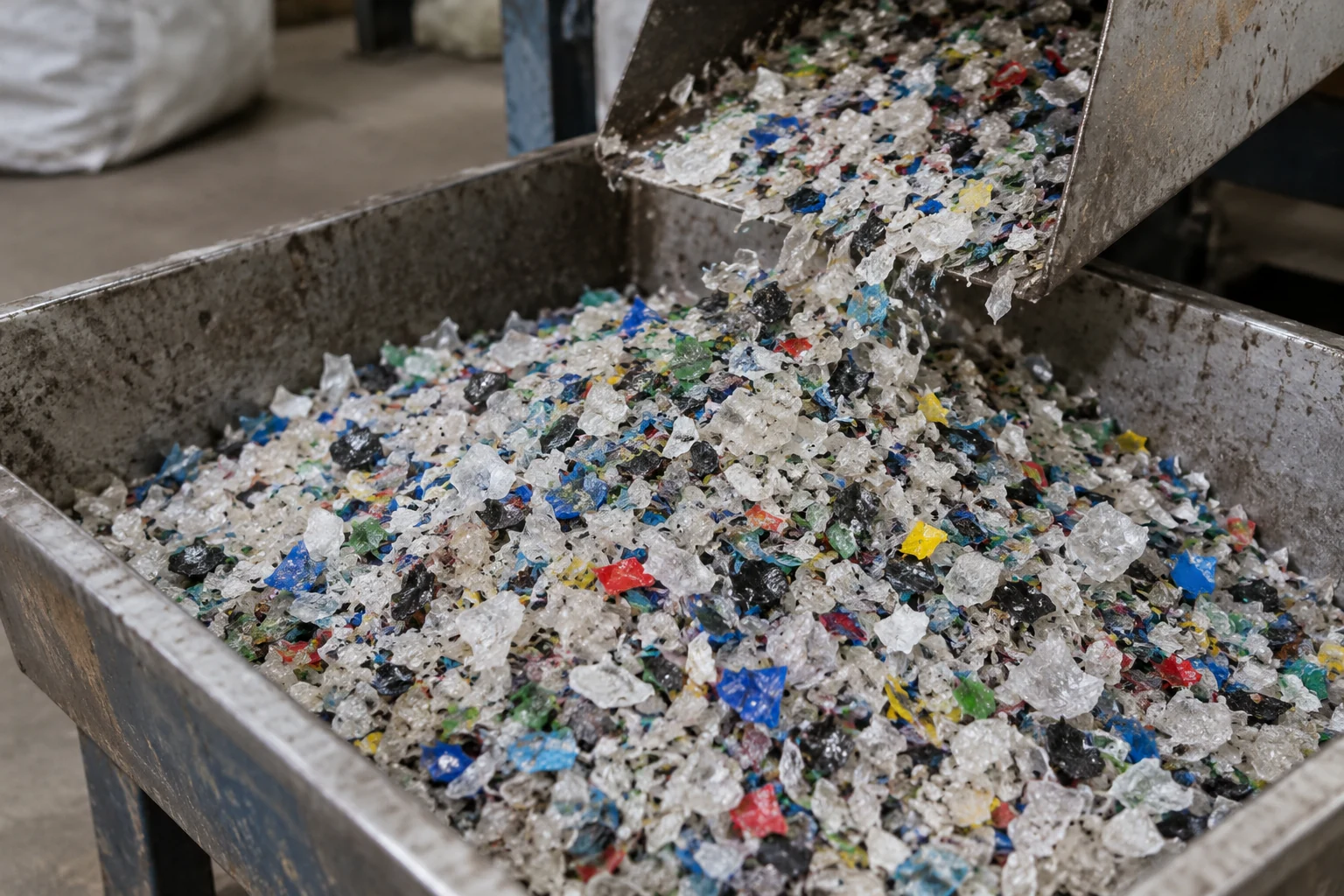
Record any drying, grinding or separation performed before analysis. Those steps can change the basis of the reported result. Keep laboratory reports linked to the original load and sample preparation rather than attaching a result to every later shipment from the same supplier.
Decide what happens to a failed or uncertain load
Create distinct statuses for awaiting results, accepted, held and rejected material. Assign who can authorize blending, further preparation or return. Blending is a process decision that needs approval and evidence; it is not a way to make an out-of-specification result disappear from the record.
Use a receiving record with load identifier, source, arrival condition, sample plan, analysis references, agreed specification version, decision and destination. Preserve deviations and the action taken. When source composition changes, review the qualification rather than relying on an old passing sample.
Write an equipment trial around the unresolved property
Give the equipment supplier representative feed, including its difficult conditions, and the required output acceptance method. Record usable yield, reject composition, material losses and the property actually improved. Include storage and handling between preparation and conversion, since the delivered condition is the decision boundary.
The process-flow guide explains why feed preparation is separate from pyrolysis and downstream upgrading. Return to recycling equipment for the selection context.
Methods and limitations
This editorial checklist uses a feedstock study and one provider’s documented process boundary. It specifies no universal contaminant limit or pretreatment recipe. It does not qualify a waste shipment or select safety provisions for a plant. Updated October 2026.